
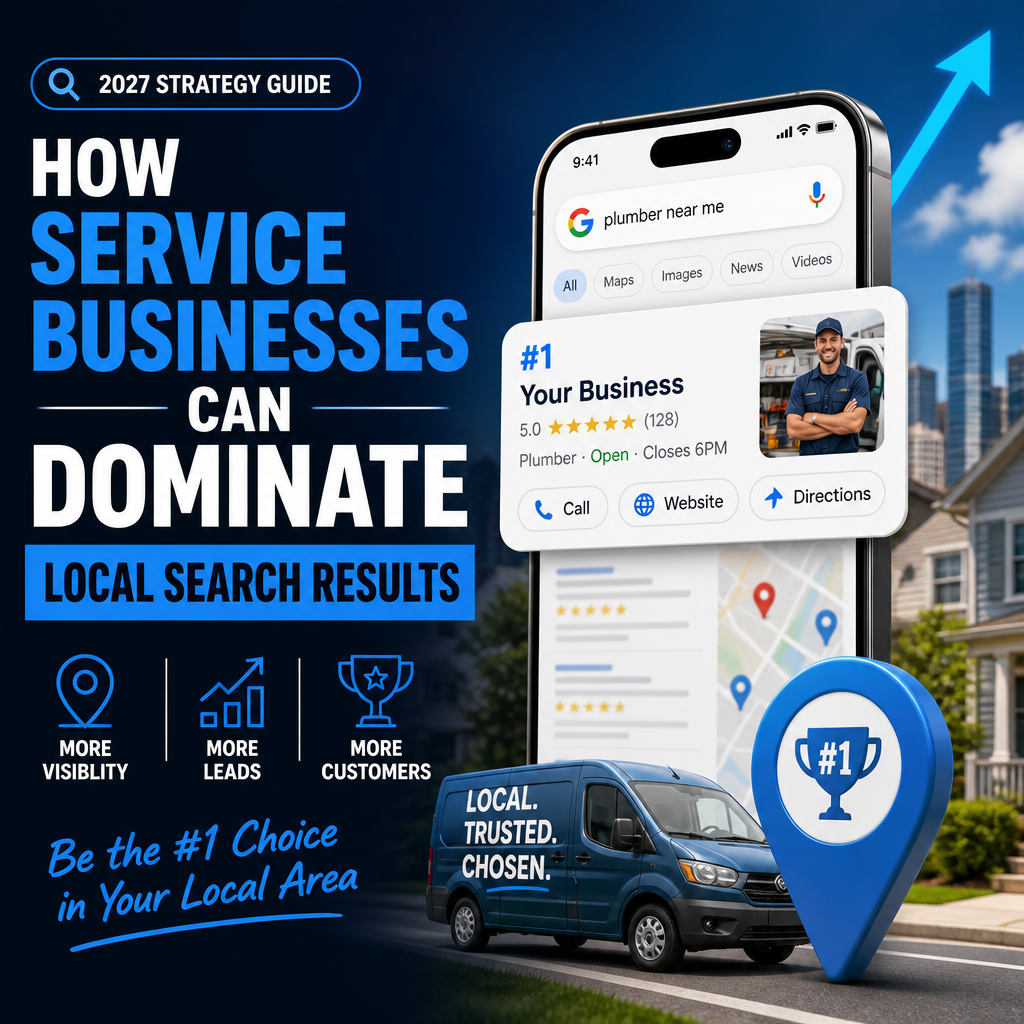
How Service Businesses Can Dominate Local Search Results in 2027
How Service Businesses Can Dominate Local Search Results in 2027
Local visibility can make the difference between a full schedule and a quiet week. In 2027, service businesses need more than a website and a Google Business Profile to stand out. Search engines increasingly connect people with nearby providers based on relevance, trust, and usefulness—whether someone searches on a map, asks an AI-powered tool, or types a service and city into a browser.
The strongest approach is to make your business easy to understand, easy to trust, and easy to contact wherever local customers are searching.

Build a Strong Local Search Foundation
Start by making sure your business information is accurate and consistent. Your name, address, phone number, website, hours, and service area should match across your website, business profiles, and reputable directories.
Claim and update your Google Business Profile, and review other platforms that matter in your industry. Select accurate categories, add your services, upload current photos, and keep holiday hours up to date. If you travel to customers rather than serving them at a storefront, set your service area appropriately and follow the platform’s rules for displaying your address.

Small inconsistencies can confuse customers and search systems. A regular checkup helps catch outdated phone numbers, duplicate listings, or old business hours before they cost you a lead.
Create Useful, Location-Specific Website Pages
A homepage rarely answers every local customer’s question. Build clear pages for your core services and the communities you genuinely serve. A plumber, for example, might create separate pages for drain repair, water heater installation, and emergency plumbing—along with location pages where there is real coverage and useful local information.

Each page should explain:
- What the service includes
- Which customers it is for
- Where the service is available
- What the process or timeline looks like
- How to request an estimate or appointment
Avoid producing near-identical pages that simply swap one city name for another. Thin, repetitive content can frustrate visitors and do little to demonstrate local expertise. Instead, include practical details such as response times, common local issues, relevant projects, or service limitations.
Make Trust Visible
Local customers often compare several providers before reaching out. Help them make a confident choice by showing evidence of your work and reliability. Add real project photos, explain your qualifications, and make pricing guidance or estimate policies easy to find.
Reviews remain an important trust signal. Ask satisfied customers for honest feedback soon after a completed job, using a simple process that complies with platform policies. Never buy reviews or offer rewards in exchange for positive ratings. Respond to reviews professionally, including critical ones, and avoid sharing private customer details.
Testimonials and case studies can strengthen your website, too. Specific examples—such as the problem solved, the type of work completed, and the outcome—are more persuasive than generic claims like “best service in town.”
Prepare for AI-Powered Search
Search results are changing. Customers may receive summaries, recommendations, or conversational answers before they visit a website. Businesses cannot control whether a platform mentions them, but they can make their information clearer and more dependable.
Use straightforward language to describe your services, qualifications, locations, and policies. Add concise answers to common questions, such as whether you offer emergency visits, what affects an estimate, or how far ahead customers should book. Keep essential information in crawlable text rather than hiding it only in images or complex interactive elements.
Structured data can also help search engines interpret details such as your business type, location, and services. It is not a shortcut to rankings, but accurate markup supports a clearer understanding of your site.
Improve the Experience After the Click
A high ranking has little value if visitors cannot quickly take the next step. Make your website mobile-friendly, fast, and easy to navigate. Put your phone number and booking option where customers can find them, and use clear calls to action such as “Request an estimate” or “Book a service.”
Test the full customer journey on a phone. Check that forms work, buttons are easy to tap, and confirmation messages explain what happens next. If you serve multiple areas, make it simple for visitors to confirm whether their location is covered.
Measure What Brings in Real Leads
Track more than rankings. Monitor calls, form submissions, booked jobs, and the pages or campaigns that generate them. Use analytics and call tracking thoughtfully, and keep privacy requirements in mind.
Review performance regularly, then improve the pages and profiles that matter most. If a service page gets visits but few inquiries, clarify its offer or make contacting you easier. If a location page attracts the wrong leads, make its coverage more precise.
Dominating local search results in 2027 is not about chasing every new feature. It is about maintaining accurate information, demonstrating genuine expertise, earning trust, and making it effortless for nearby customers to choose your business.