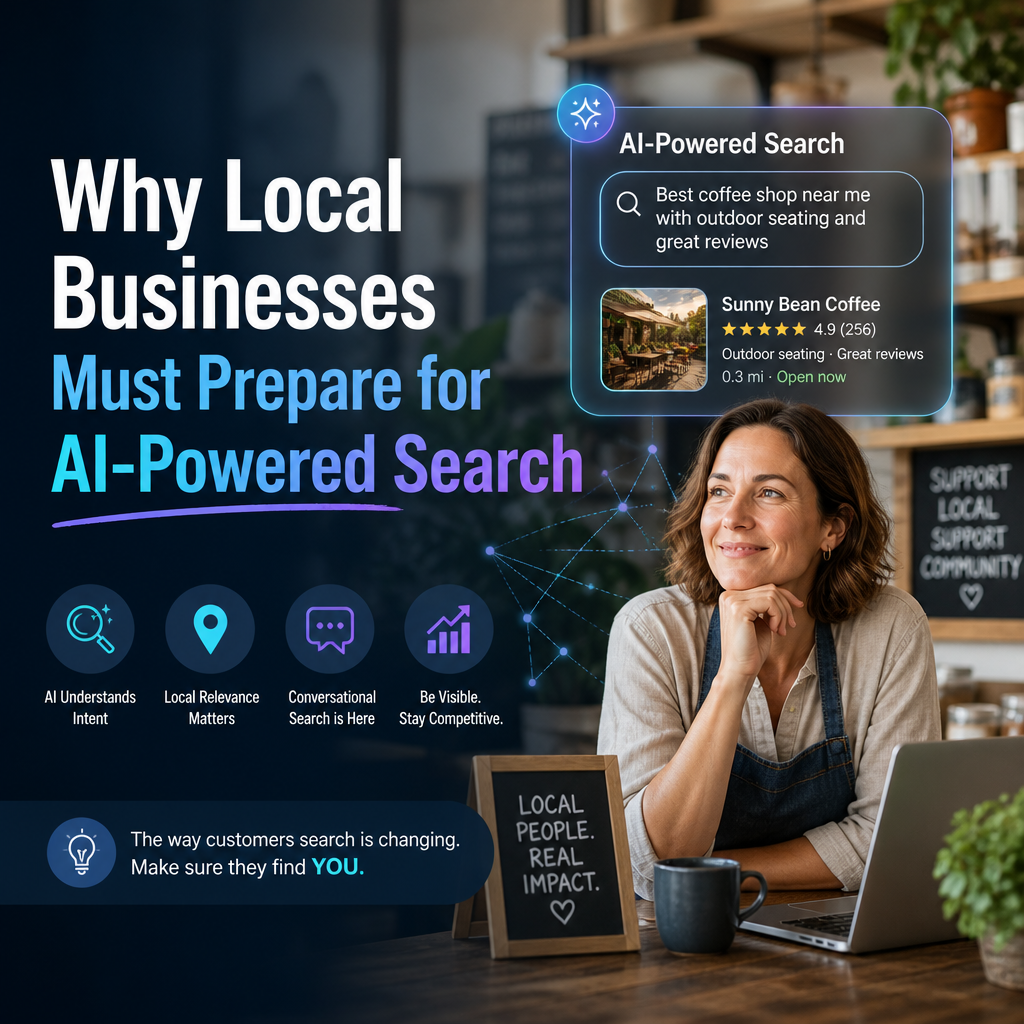
Why Local Businesses Must Prepare for AI-Powered Search
Why Local Businesses Must Prepare for AI-Powered Search
For years, local businesses have relied on search engines to help nearby customers find their services. A person looking for a plumber, dentist, café, or accountant might type a few words into a search bar and choose from a list of websites and map results.
That behavior is changing. AI-powered search tools increasingly respond with direct answers, summaries, and recommendations. Instead of presenting only a list of links, they may explain which businesses appear to fit a customer’s needs and why.

For local businesses, this shift makes online visibility more than a matter of ranking for a few keywords. It requires clear, trustworthy information that both people and AI systems can understand.
How AI-Powered Search Changes Local Discovery
Traditional search often asks customers to compare several results themselves. AI-powered search can shorten that process by combining information from websites, business profiles, reviews, and other sources into a single response.

A customer might ask, “Which family-friendly restaurant near me has outdoor seating?” or “Who can repair a leaking roof this weekend?” These detailed questions give search systems more context than a simple search for “restaurant” or “roofer.”
AI answers are not always the same, and businesses cannot guarantee that they will be recommended. But the underlying trend is clear: people are using more conversational queries, and search systems are trying to respond with relevant, specific information.

Why Local Businesses Should Pay Attention
Customers may make decisions before visiting a website
When an AI-generated answer includes a business’s services, location, hours, or reputation, a customer may form an opinion before clicking through to the website. If important details are missing or inconsistent, the business may be overlooked—or misunderstood.
Clear information can help a business stand out
Local businesses often have advantages that are difficult to capture in broad advertising: specialized services, convenient hours, community ties, accessibility, or expertise in a particular area. Clear, detailed information helps potential customers understand those strengths.
Trust remains essential
AI systems draw on available information, but customers still look for signs that a business is reliable. Accurate contact details, recent reviews, helpful website content, and consistent descriptions all contribute to a stronger online presence.
Practical Steps to Prepare
Keep business details accurate and consistent
Review your name, address, phone number, hours, service area, and website across your website and major business listings. Update seasonal hours, holiday closures, and service changes promptly.
Consistency matters. If one listing shows an outdated phone number or a different location, customers may lose confidence, and search systems may have a harder time identifying the correct information.
Build a useful, well-organized website
Your website should explain what you do, where you work, and who you serve. Give important services their own pages when appropriate, and use straightforward language rather than relying on vague promotional claims.
For example, a contractor could clearly describe the types of repairs offered, the communities served, and how customers can request an estimate. A medical practice could make its services, accepted appointment methods, and office details easy to find.
Answer the questions customers actually ask
Think about what people want to know before contacting you. Common questions may cover pricing, availability, booking, parking, delivery, qualifications, or the process for getting started.
A clear FAQ page can help, but useful answers can also appear on service pages. Aim to provide direct, specific information based on your actual policies. Avoid adding details simply to chase search trends.
Encourage genuine reviews and respond thoughtfully
Reviews help prospective customers understand what an experience with your business may be like. Invite satisfied customers to share honest feedback, following the rules of the platforms you use. Never buy reviews or pressure customers to post only positive comments.
Respond professionally to both praise and criticism. A considerate response shows that the business pays attention and takes customer concerns seriously.
Use structured data where appropriate
Structured data is a way to label information on a website so search systems can interpret it more easily. Depending on the business, relevant details may include a physical address, opening hours, services, or contact information.
Structured data does not guarantee a place in an AI answer. It is one part of a broader effort to make information accurate, accessible, and well organized.
Preparation Is About Better Service, Too
Preparing for AI-powered search is not about trying to trick an algorithm or predicting exactly how search will evolve. It is about making a business easier to understand and easier to trust.
Start with the basics: keep details current, explain services clearly, publish genuinely helpful information, and provide a dependable customer experience. These steps support visibility across many forms of search—and help real people decide whether your business is the right choice.