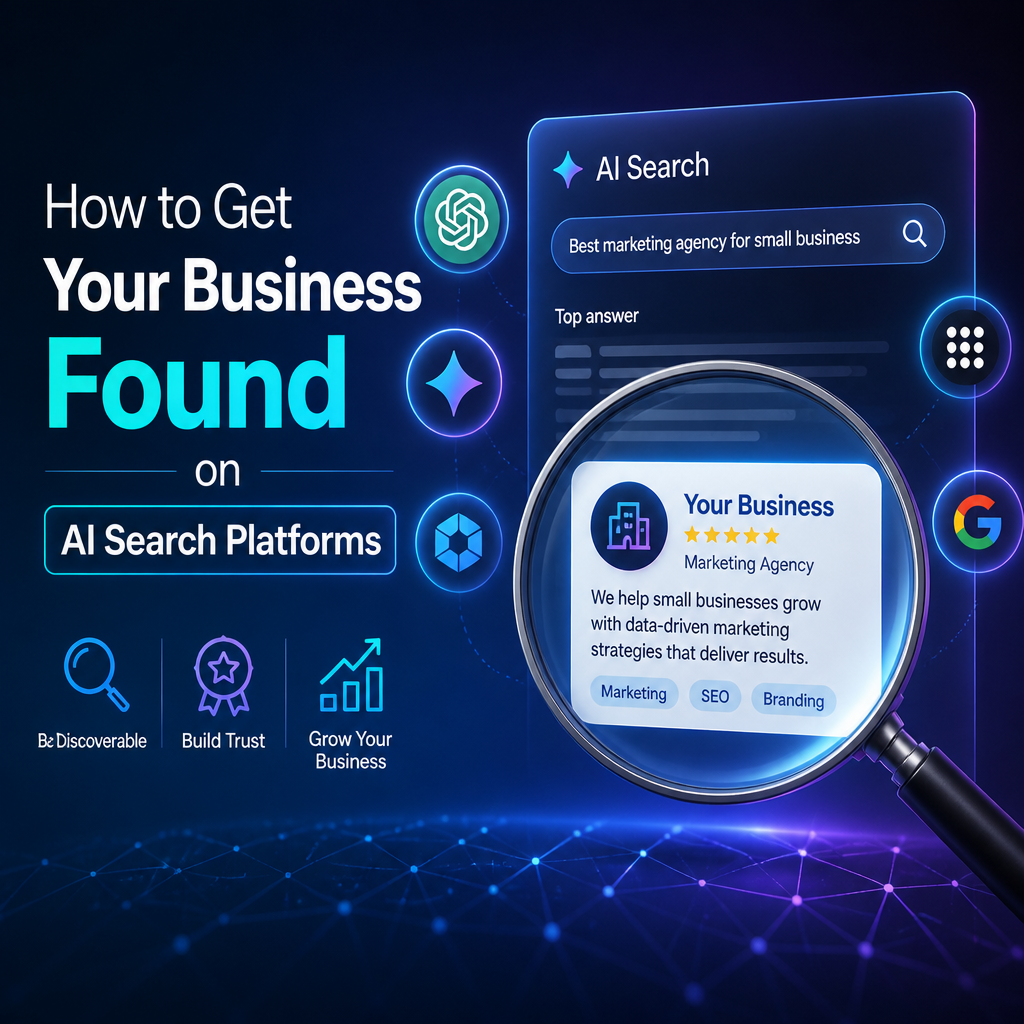
How to Get Your Business Found on AI Search Platforms
How to Get Your Business Found by AI Search Platforms
AI search platforms are changing how people discover businesses. Instead of showing only a list of links, tools such as ChatGPT, Google’s AI features, and Perplexity may summarize information and recommend specific companies. To get your business found by AI search platforms, make your information easy to find, understand, and verify across the web.
There is no guaranteed shortcut to being recommended. But the same practices that help customers trust your business—clear information, useful content, and consistent details—can also improve your chances of appearing in AI-generated answers.

Make Your Business Information Clear and Consistent
AI systems draw on information from websites, directories, news sources, and other public pages. Conflicting details can make it harder for them to identify and describe your business accurately.
Check that your core information matches everywhere it appears:

- Business name
- Address and service area
- Phone number and email
- Hours of operation
- Products and services
- Website URL
Start with your website and major business profiles, then review relevant industry directories and local listings. If you serve multiple locations, create a dedicated page for each one with accurate local details. Avoid using slightly different names or addresses across platforms unless there is a genuine reason.
Create Pages That Answer Real Questions
People often turn to AI search with specific questions, such as “Who repairs commercial ovens near me?” or “What should I look for in a payroll service?” Pages that directly answer relevant questions can help both prospective customers and search systems understand what you do.

Build useful content around the needs of your audience:
- Service pages that explain what you offer, who it is for, and where it is available
- Frequently asked questions about pricing, timing, eligibility, or the process
- Practical guides that help customers compare options or solve a problem
- Location pages that describe the services available in each area
Use clear headings and plain language. Give the direct answer early, then add context, examples, or caveats. Avoid stuffing pages with repeated keywords; prioritize information a customer would genuinely find helpful.
Build Trust With Evidence
AI platforms may be more likely to rely on information that appears credible and is supported by other sources. Make your expertise and track record easy to assess.
Include details such as relevant qualifications, years in business, service areas, and the people behind your company. Where appropriate, publish case studies, project examples, original research, or explanations from experienced staff. Use customer reviews and testimonials accurately, and do not invent endorsements or results.
Your website should also make basic trust signals easy to find. Provide clear contact information, a working privacy policy, and transparent descriptions of your services. Keep important claims specific and verifiable. “We help small manufacturers reduce shipping delays” is more informative than “We are the best business in town.”
Use Structured Data and Sound Website Basics
Structured data is code that helps search engines interpret details on a page, such as a business’s name, location, hours, and services. Adding appropriate schema markup can make that information easier for search systems to process. It does not guarantee an AI recommendation, but it supports accurate understanding.
Technical accessibility matters, too. Make sure your pages load reliably, work on mobile devices, and can be crawled by search engines. Use descriptive page titles, organize content with logical headings, and link related pages together. Check that important information is written as readable text rather than appearing only inside images or inaccessible interactive elements.
Earn Mentions Beyond Your Website
Your website is only one source of information about your business. Relevant mentions elsewhere can reinforce your credibility and help AI platforms connect your name with your expertise.
Look for genuine opportunities to contribute to your industry or community. These might include local news coverage, professional associations, trusted business directories, partner websites, or interviews with knowledgeable team members. Focus on relevance and accuracy rather than pursuing large numbers of low-quality links.
Encourage satisfied customers to leave honest reviews on platforms that matter in your industry. Respond professionally, including when feedback is critical. Reviews can help people make decisions and provide useful context about your customer experience.
Keep Information Fresh and Measure Progress
Outdated pages can lead to incorrect summaries. Review your website, business listings, prices, service descriptions, and hours regularly. Update content when your offerings change, and remove pages that are no longer accurate.
Track the results through website analytics, referral traffic, branded searches, and inquiries from new customers. You can also test relevant questions in AI search tools to see whether your business appears and whether the details are correct. Treat these checks as observations rather than definitive rankings, since answers can vary by platform and location.
Focus on Being the Best Answer
Getting your business found by AI search platforms is not a one-time optimization task. It is the ongoing work of publishing helpful information, maintaining consistent details, and earning trust.
When customers and search systems can quickly understand what you do, where you operate, and why your business is credible, you give both a stronger reason to include you in the answer.