
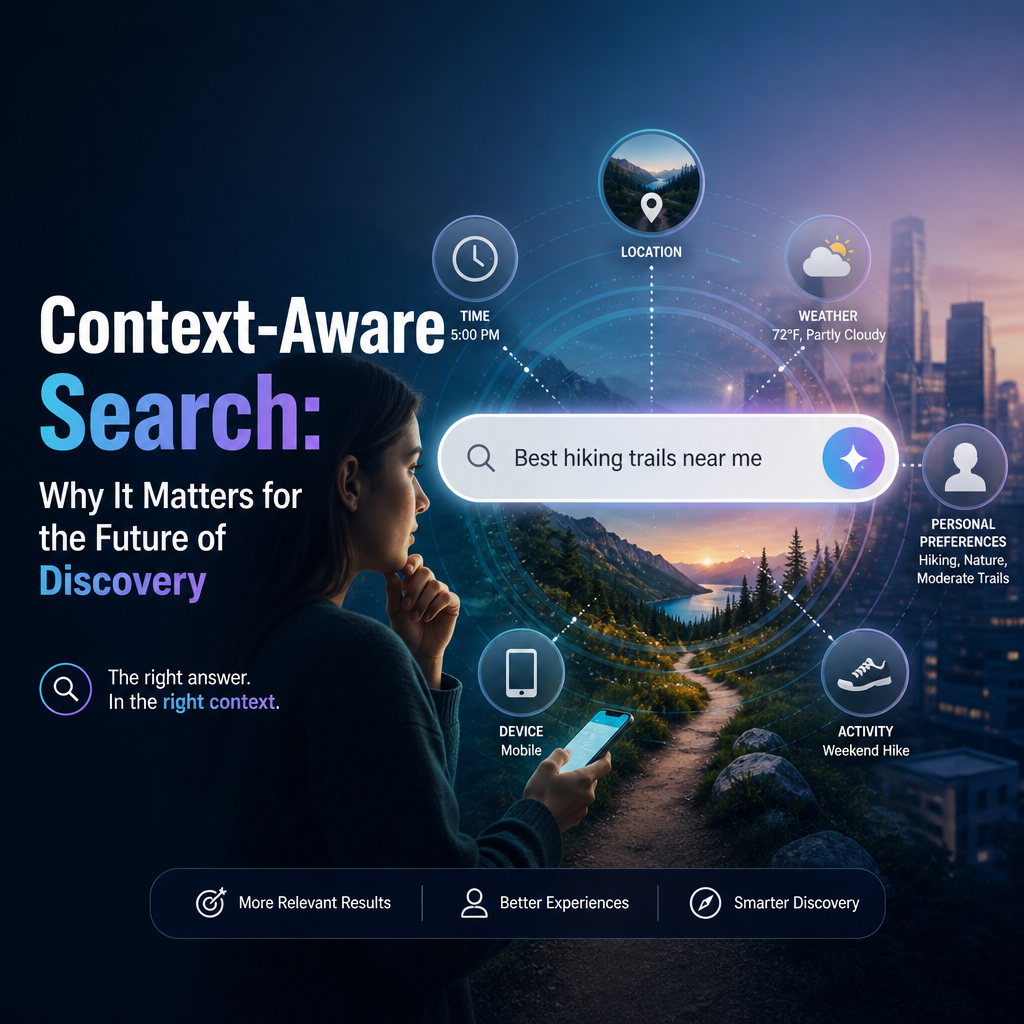
Context-Aware Search: Why It Matters for the Future of Discovery
The Rise of Context-Aware Search and Why It Matters
Search used to be a simple exchange: type a few words, receive a list of pages containing them. That approach still works for straightforward queries, but it often misses what people actually mean. A search for “best place for lunch” could depend on where someone is, what time it is, what they like to eat, and whether they need a quick meal or a sit-down restaurant.
Context-aware search is changing that experience. By considering more than the words in a query, search tools can deliver results that are more relevant to a person’s situation, intent, and preferences.

What Is Context-Aware Search?
Context-aware search uses signals surrounding a query to interpret what the user is looking for. Instead of treating each search as an isolated request, it considers factors that can help clarify meaning.
These signals may include:

- Location: Where the search is happening
- Time: The date, time of day, or current events
- Search history: Previous queries and interactions
- Device and situation: Whether someone is on a phone, computer, or voice assistant
- Intent: Whether the person wants to learn, compare, buy, or take action
For example, someone searching “weather” may want the forecast for their current location. A person who recently searched for hiking trails might instead appreciate trail conditions or a mountain forecast. Context helps systems distinguish between those needs.
Why Context Matters
Search queries are often incomplete
People rarely write detailed instructions into a search box. They use shorthand, broad phrases, and follow-up questions. Someone might search “electric cars,” then ask “How far can they go?” In a context-aware system, the second question can be understood as referring to electric vehicles without requiring the user to repeat the topic.

This makes search feel more natural. People can explore an idea in stages, using everyday language rather than carefully engineered keywords.
The same words can mean different things
A query’s meaning can change based on a person’s circumstances. “Open now” is useful only when a search tool knows what businesses are nearby and what time it is. “How do I fix this?” may depend on a product the person has already been researching.
By using context, search tools can reduce ambiguity and surface answers that fit the moment, rather than returning generic results.
How Context-Aware Search Works
Modern search systems combine several techniques to understand queries and rank results. Language models can identify relationships between words and interpret conversational questions. Location services can prioritize nearby options. Recommendation systems may use previous interactions to personalize results.
Many systems also draw on structured information, such as business hours, product details, or publication dates. Together, these methods help connect a query to its likely purpose.
The result is a shift from matching exact words to understanding meaning. A search for “quiet coffee shop with Wi-Fi near me” can account for the user’s location and the qualities they care about, rather than simply finding pages that repeat those terms.
Benefits for Users and Businesses
For users, context-aware search can make finding information faster and less frustrating. It can help people:
- Get answers suited to their location or immediate needs
- Ask follow-up questions without restating the full topic
- Discover relevant products, services, and information
- Spend less time sorting through unrelated results
Businesses can benefit, too. A local shop may be more visible to people searching nearby, while a publisher may reach readers whose interests align with its content. The emphasis, however, is increasingly on usefulness and relevance—not simply repeating a keyword.
That means organizations should create clear, accurate content that directly answers real questions. Up-to-date business details, descriptive page titles, and well-organized information can all help search systems understand what a page offers.
The Importance of Privacy and Trust
Personalized results can be helpful, but they also raise important questions. Users may not know which data is being collected or how it affects what they see. Location, browsing behavior, and search history can reveal sensitive details about a person’s life.
Responsible context-aware search should make data practices understandable and give users meaningful choices. It should also avoid using personalization in ways that unnecessarily narrow someone’s exposure to information. Relevance is valuable, but so are transparency, privacy, and diverse perspectives.
What Comes Next?
As search becomes more conversational and integrated into phones, cars, workplace tools, and voice assistants, context will play an even larger role. People will expect systems to understand not only what they ask, but why they are asking and what information would help next.
The rise of context-aware search marks a broader change in how people find information. Search is moving beyond lists of matching pages toward experiences that respond to intent and circumstance. When built thoughtfully, that shift can make finding the right answer easier—while preserving the trust people need to use search confidently.