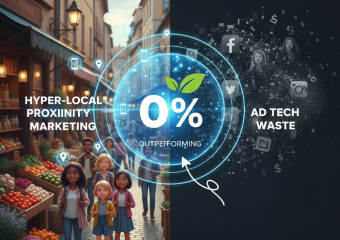

How Hyperlocal AI Is Transforming the Way People Find Businesses
Why Hyperlocal AI Will Transform How People Find Businesses
Finding a nearby business used to mean scanning a map, reading a handful of reviews, and hoping the information was up to date. Today, people expect more: recommendations that understand what they need, where they are, when they need it, and what matters to them.
That expectation is driving the rise of hyperlocal AI. By combining artificial intelligence with detailed, location-based information, hyperlocal tools can help people discover businesses that fit a specific moment—not just a general search phrase. The result could reshape how customers find local services and how businesses earn attention.

What Is Hyperlocal AI?
Hyperlocal AI uses AI systems to interpret information about a very small geographic area, such as a neighborhood, a few city blocks, or a specific shopping district. It can draw on signals including business details, opening hours, customer reviews, local events, inventory, traffic, and user preferences.
A traditional search might return a list of nearby cafés. A hyperlocal AI assistant could answer a more precise request: “Where can I get a quiet coffee and work for an hour near the train station?” The difference is context. Instead of matching a few keywords, the system tries to understand the person’s intent and the circumstances behind it.

Discovery Becomes More Personal
People rarely search for businesses in the abstract. They have a particular need, budget, schedule, or preference. AI can make local discovery more useful by considering these details together.
For example, a family looking for dinner may care about kid-friendly seating and short wait times. Someone searching for a mechanic may prioritize availability today, transparent pricing, and proximity to home. A visitor may want a locally owned shop rather than a familiar national chain.

Hyperlocal AI can turn those preferences into more relevant recommendations. As a result, customers may spend less time comparing generic lists and more time finding businesses that actually suit their needs.
Local Information Can Feel More Current
One of the biggest frustrations with online business listings is stale information. A shop may have changed its hours, sold out of a popular item, or temporarily closed without updating every directory.
AI-powered local platforms could improve discovery by bringing together more timely signals. These might include business updates, appointment availability, menus, stock information, or changes related to local conditions. In the future, a search for a nearby pharmacy might show not only which locations are open, but also which have the item a customer needs.
The quality of these answers will depend on the quality of the underlying data. Businesses that keep their listings accurate and provide useful updates are more likely to be represented well.
A New Opportunity for Small Businesses
Hyperlocal AI could also change the balance between large brands and independent businesses. Many small companies struggle to compete for visibility in broad search results, especially when they lack large advertising budgets.
More contextual discovery may help a smaller business surface because it is the right fit for a particular request. A neighborhood bakery with vegan options, a repair shop with same-day appointments, or a bookstore hosting a local event could become easier to find without needing to outrank every major competitor.
That does not mean visibility will happen automatically. Local businesses will still need clear information, helpful customer experiences, and a strong online presence. But the criteria for being discovered may increasingly include relevance and usefulness—not only brand recognition.
The Challenges of Smarter Local Search
Hyperlocal AI brings important questions along with its potential benefits. Location data can be sensitive, and people should have control over how their information is collected and used. Recommendations should also be explainable enough that users can understand why a business appeared.
There is a risk, too, that automated systems could favor businesses with more complete data or stronger digital tools. If information is missing or outdated, a deserving local business may be overlooked. Platforms will need ways to improve accuracy and give businesses fair opportunities to correct their listings.
Customers should also expect recommendations to reflect real quality rather than paid placement disguised as neutral advice.
Getting Ready for the Hyperlocal Future
Businesses can prepare by making their digital presence dependable and specific. Useful steps include:
- Keeping hours, contact details, and service areas accurate
- Describing products and services in plain, detailed language
- Updating menus, availability, and appointment information
- Responding thoughtfully to customer feedback
- Sharing relevant news, events, and seasonal changes
These basics help both people and AI systems understand what a business offers.
A More Useful Way to Find What’s Nearby
Hyperlocal AI has the potential to make local search feel less like browsing a directory and more like receiving a practical recommendation. By connecting people’s immediate needs with timely, neighborhood-level information, it can make discovery faster and more relevant.
For local businesses, the shift offers a reason to focus on accurate information and genuine customer value. For customers, it promises a simpler path from “What’s nearby?” to “That’s exactly what I need.”